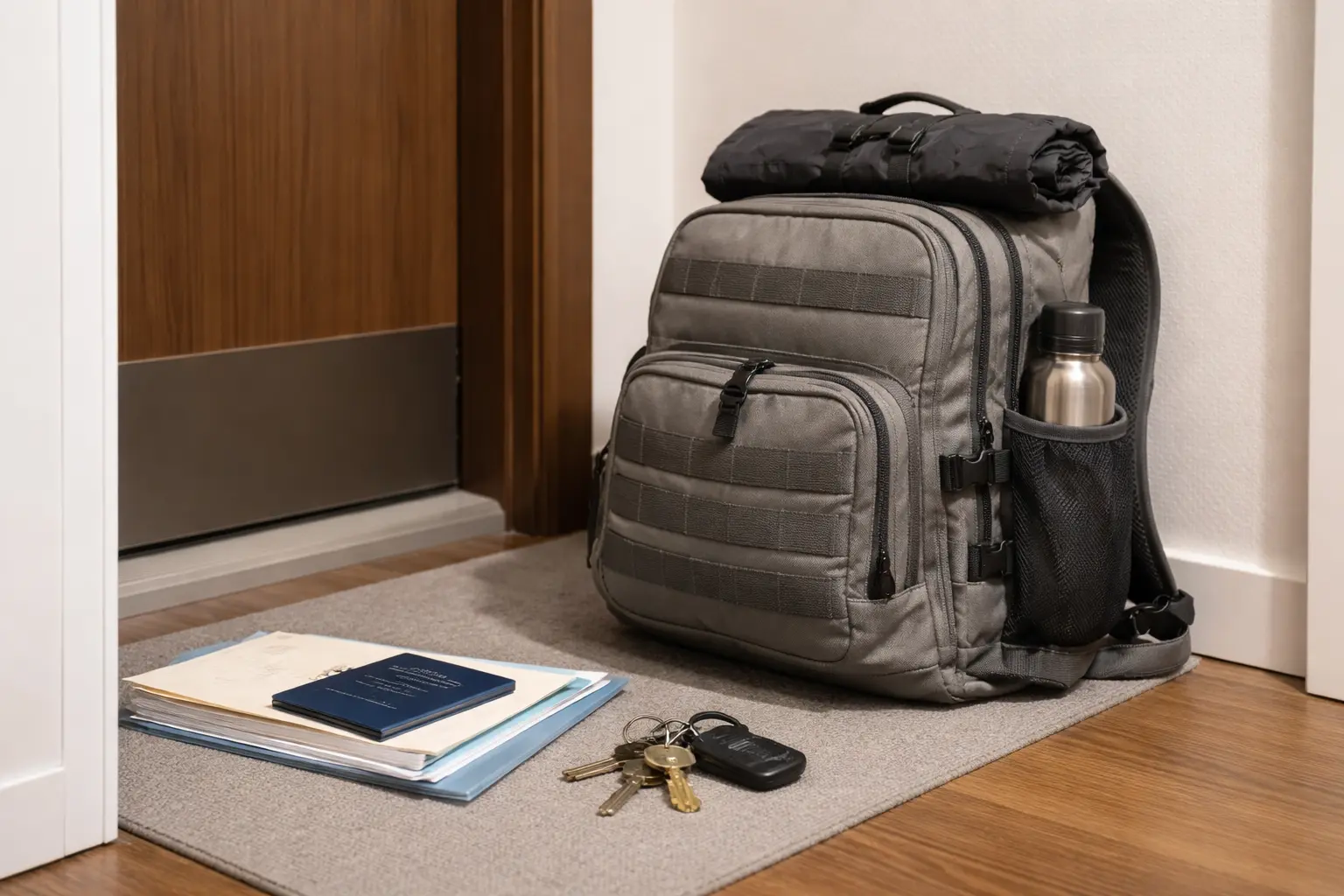
What is a safety plan?
A safety plan is not a decision to leave. It is a way to prepare your options — so that you have choices when you need them.
Level 1: Immediate danger
All emergency numbers and support services are listed on Where can I turn?
If there is (a threat of) physical violence:
- Call 112 (emergency services) or 101 (police)
- Leave the situation if you can do so safely
- Don't take anything that could escalate the situation
- Call 1712 for immediate guidance
Level 2: Not immediate danger, but risky
Document
- Keep evidence out of your partner's reach: messages, photos of injuries, a private diary
- Use a cloud account or email address she doesn't know
- Note the date, time, description and any witnesses for each incident
- Document patterns over time — isolated incidents disappear in a legal file without context
Trusted person
- Inform one reliable person about your situation
- Agree on what happens if you don't make contact for X hours
Legal advice
- Consult a lawyer before leaving the family home — this has consequences for custody
- In case of a counter-report: seek legal advice immediately
Finances
- Make sure you have access to your own finances
- Open a separate account if necessary
Call 1712: free, anonymous, professional — they help you create a personalized plan.
Level 3: Digital safety
- Check your phone for tracking apps
- Use a separate device or private browsing mode for sensitive communications
- Change passwords on accounts she knows
- Realize that messages, location history and app usage can be used as "evidence" — in both directions
Temporary restraining order
In Belgium, in cases of serious and immediate danger, a temporary restraining order can be imposed on the perpetrator:
- Requested via the police or public prosecutor
- Initially lasts a maximum of 14 days (imposed by the public prosecutor)
- The family court can extend it by up to 3 months
- Followed up by a justice house
- In theory gender-neutral, but in practice more often imposed on male perpetrators
As a male victim wanting a restraining order imposed on your partner: legally possible but requires a well-documented file and legal support.
Temporary exclusion order — Vlaanderen.be
Already left? Read about recovery after the relationship.
Want to know more? Read how to gather evidence and what to expect from the police and prosecutor.
Frequently asked questions
Should I have my injuries documented by a doctor?
Yes. Have injuries documented as soon as possible after an incident by your GP, an on-call doctor or the emergency department, and ask for a medical certificate. Psychological complaints (insomnia, anxiety) can also be documented. These certificates are crucial evidence later on.
What is a temporary exclusion order? Can my partner be removed from our home?
In cases of serious and immediate danger, the Belgian public prosecutor can impose an exclusion order of up to 14 days on the violent partner. The family court can extend it by up to 3 months. The order applies even if the home belongs to your partner. Report your situation to the police.
Where can I find shelter as a man?
Call the CAW on the free number 0800 13 500: they arrange crisis shelter, also for men — with or without children. Helpline 1712 can also refer you to safe shelter in your region. In immediate danger, call 112 or 101 first.
Can I record conversations as evidence?
Recording a conversation you take part in yourself is in principle not a criminal offence in Belgium. Distributing or publishing the recording, however, can be. Whether a recording is admitted as evidence is up to the judge. Ask a lawyer for advice before using recordings.